

EMBRACE CLIMATE SMART AGRICULTURE PRACTICES TO BUILD RESILIENCE
- Vanwick Zulu
- 12 Mar, 2026
INTERNATIONAL Maize and
Wheat Improvement Centre (CIMMYT) Principal Scientist, Christian Thierfelder, has
urged farmers to adopt Climate Smart Agricultural practices in order to develop
resilience towards climate shocks.
Professor Christian
Thierfelder, said climate-smart agriculture systems are cropping systems that
are better adapted to climate shocks like drought or heat stress. They reduce
greenhouse gas emissions, sequester carbon and are also profitable for farmers,
while being beneficial for them and their household.
“Conservation
agriculture is for example one that has been promoted by the Ministry of
Agriculture for many years, it’s a system based on minimum soil disturbance,
crop residue retention and crop diversification. But also, traditional
intercropping systems that help capture more moisture during dry spells or
water harvesting technologies like potholes or waterways where you can save
water are considered climate smart,” Professor Thierfelder explained.
Professor Thierfelder
explained when farmers experience short in-season dry spells, our cropping
systems actually can support that because there is enough residual soil
moisture that the plants can grow from.
“Our aim is for farmers
to produce under every condition. If it’s drier or wetter, we want them to have
a stable yield. And conservation agriculture systems or these sustainable
intensification practices that we have here add to that; they builds
resilience. Resilience means you can have something even if the situation is
terrible,” he said.
Professor Thierfelder
said farmers are traditionally used to ploughing the land, turning it all
upside down, planting maize and that does not create resilience, that just
leads to degradation.
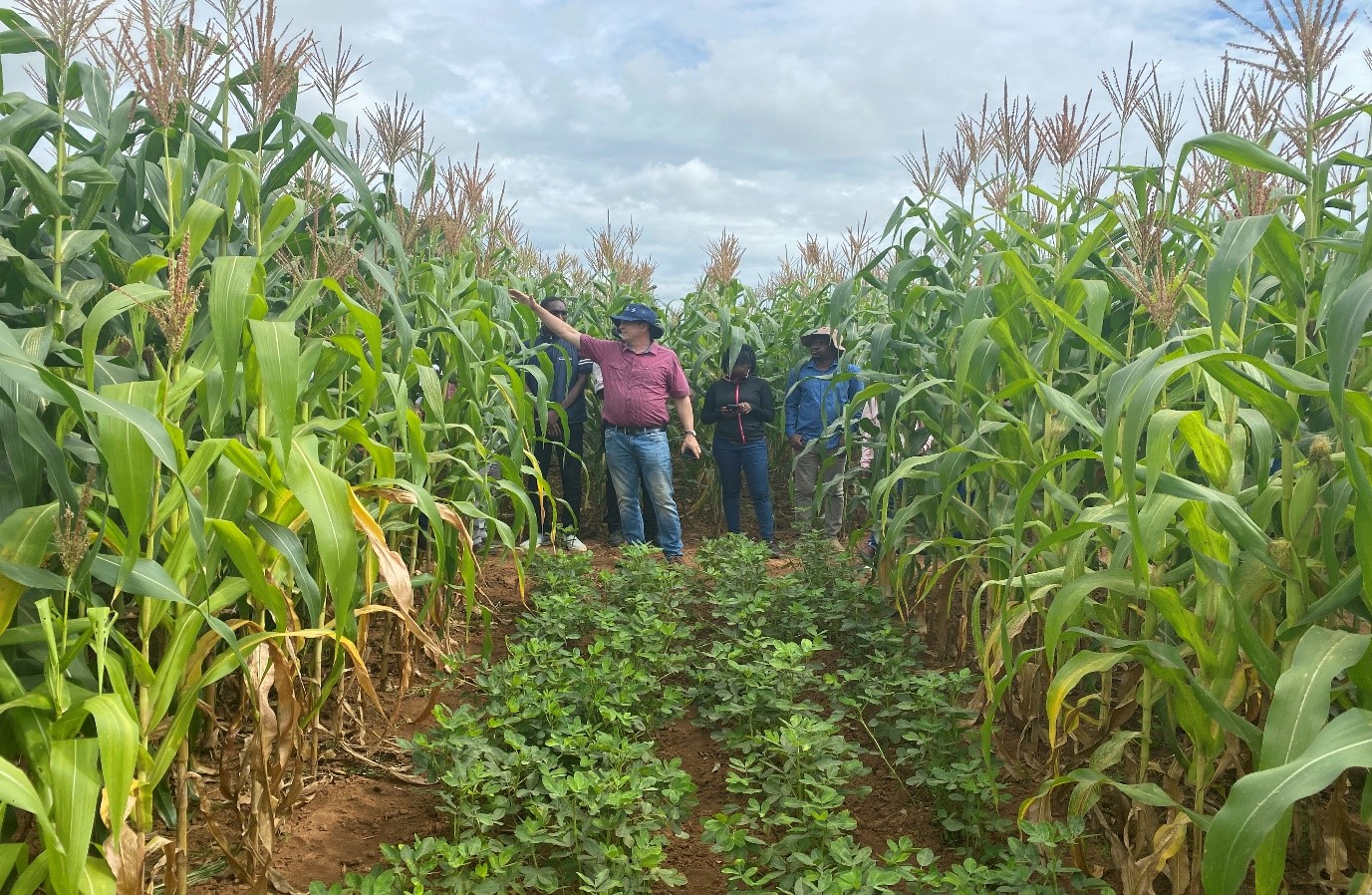
“What we do here is to
provide information and train farmers to practise farming differently, leaving
the soil intact, putting crop residues like the forest puts the leaves, and
also plant different types of crops. More different types of crops build a more
robust and less risky farming system,” he said.
And CIMMYT Development
Economist, Hambulo Ngoma, said the SIFAZ project introduces different
technologies to farmers, but the real question is, to what extent do farmers
actually benefit from these technologies.
“We have been running
annual surveys to try and estimate adoption, diffusion, drivers and enablers,”
he said.
Mr Ngoma explained various
other economic analysis have been done to try to understand the economic
benefits of these practices that are being promoted under the SIFAZ project.
“We conduct our surveys by
taking a sample of farmers that host these trials, both mother and baby trial
farmers and other farmers. Then, we track the extent to which they are adopting
and using the technologies on the trials in their own fields because that’s
when real diffusion happens. And from what we have seen, there is quite a
notable increase in the proportion of farmers that are actually adopting some
of these technologies from the trials to their farms,” he said.
He explained beyond the
adoption, what are the economic benefits of this sustainable intensification
practice? We’ve done quite a lot of analysis in that respect, and we find very
encouraging and positive results, both at the household level in terms of
yields, productivity, but also in terms of income,” he said.
The SIFAZ Project is a 7.5-year project funded by the EU and implemented by the Food and Agriculture Organization (FAO) of the United Nations (UN) in collaboration with the Ministry of Agriculture and the International Maize and Wheat Improvement Centre (CIMMYT). -NAIS
.jpg)
Leave a Reply
Your email address will not be published. Required fields are marked *
ChefSPRAY
ChefSPRAY makes healthy cooking easy and delicious with our premium range of oils in convenient spray bottles. From extra virgin olive oil spray to ghee spray, our products are crafted with the finest natural ingredients and contain no artificial additives. Simply spray while cooking for precise portion control, reduced waste, and better calorie management. ChefSPRAY is your go-to for effortless, nutritious, and flavorful meals! https://chefspray.com/collections/combos https://chefspray.com/collections/cooking-oil-spray
technosmedia
This is an inspiring example of how practical, hands-on training through initiatives like SCRALA is making a real impact in rural communities. It's great to see farmers like Mr. Mbewe and Mr. Chilepa adapting to climate-smart practices and seeing the benefits. Addressing soil-specific challenges, especially in clay-heavy areas, should definitely be a priority moving forward. Such grassroots interventions show that with the right support, resilience is achievable. Kudos to all the partners involved! – <a href="https://technosmedia.com/" target="_blank">Technos Media</a>
Search
Category